
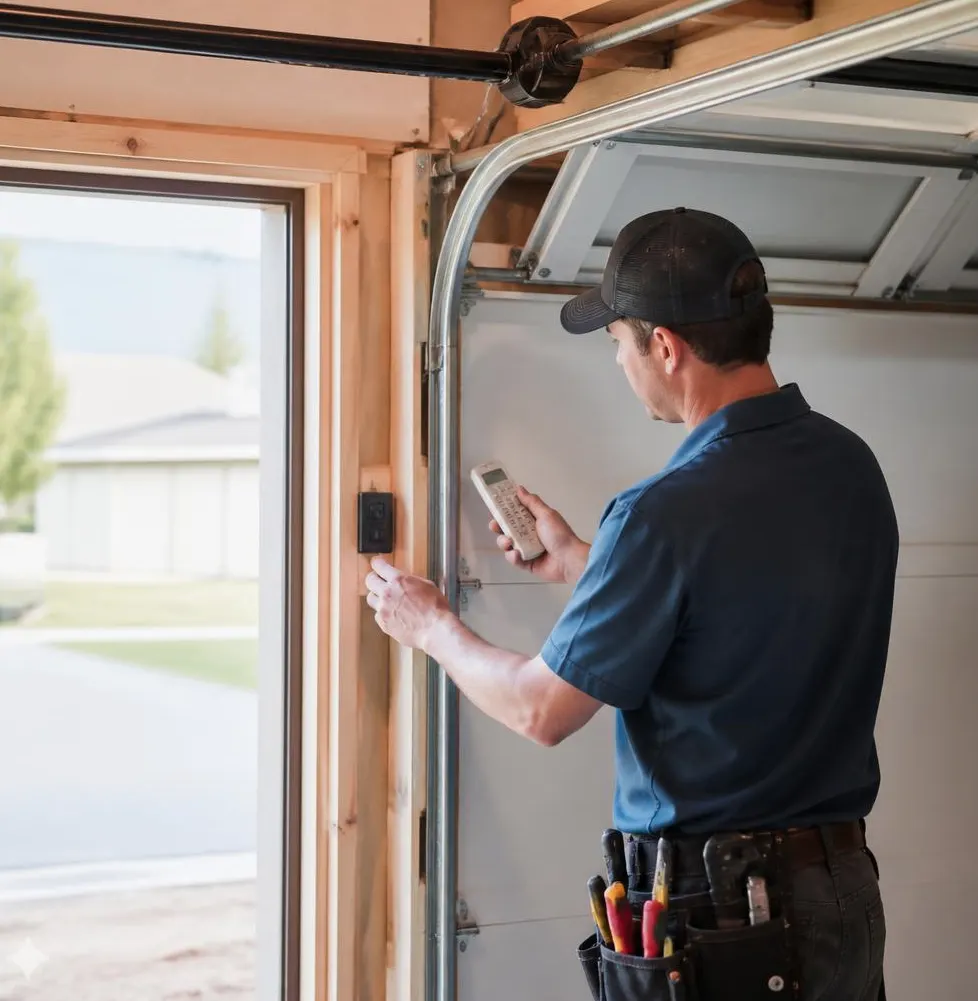
The Mistake Almost Everyone Makes First
It's six degrees out, you're already late, and the garage door won't budge. The instinct is to hit the opener button again and again, or grab a shovel and pry at the bottom seal. It's tempting because it feels like it should work — a little extra force, right? But an opener motor that keeps straining against a door that isn't moving will burn out gears or strip the drive mechanism fast. And prying at a frozen seal with a metal tool can crack the panel, bend the track, or tear the weatherstripping you're trying to free. Both mistakes turn a five-minute fix into a repair call.
What You're Actually Seeing
A few symptoms tend to show up together or separately this time of year:
- The door looks sealed to the concrete, sometimes with visible ice or frost at the bottom edge
- The opener motor runs and sounds like it's working, but the door doesn't lift
- The door starts to open, then reverses back down on its own
- The door moves, but slower and with more effort than usual, sometimes with a grinding or groaning noise
- One side lifts before the other, so the door looks crooked as it rises
Each of these points to a different cause, and a technician checks them in a specific order — cheapest and most obvious first.
1. Ice at the Bottom Seal
This is the most common culprit after a North Tonawanda cold snap, especially following melting snow that refreezes overnight. The rubber weatherstripping along the bottom of the door bonds to a thin layer of ice on the concrete. The fix is simple: never pry it. Pour warm (not boiling) water along the seal line, or use a de-icing product made for garage thresholds, then let it sit for a minute before trying the opener again. If this happens repeatedly, the seal itself may be worn and letting water pool underneath instead of shedding it, which is common on older doors that haven't had the bottom gasket replaced.
2. Hardened or Old Lubricant on Rollers and Tracks
Cold thickens grease. If the rollers, hinges, and tracks haven't been lubricated with a product rated for cold weather, the lubricant can gum up and resist movement, making the door feel heavy or sluggish even once it's free of ice. A technician checks each roller and hinge point for stiff or dry movement and reapplies a silicone or lithium-based lubricant made for garage door hardware — not WD-40, which is a solvent and will actually strip what lubrication is left.
3. Spring Tension
Torsion and extension springs lose a bit of flexibility in extreme cold, and if they were already near the end of their lifespan, winter is often when that shows up. An opener straining to lift a door that feels unusually heavy, or a door that only opens partway before stalling, points here. A technician checks spring tension by hand (never attempt this yourself, torsion springs store serious force) and looks for visible gaps, rust, or stretching. If the springs are original to an older home, cold weather is often the final straw that reveals they needed replacing anyway.
4. Opener Force Settings and Sensors
If the door opens partway and reverses, the opener's force sensitivity is often misreading the extra resistance from stiff cold hardware as an obstruction and stopping the door as a safety measure. This isn't usually a sensor failure — it's the opener doing exactly what it's designed to do when something feels heavier than normal. A technician checks the force and limit settings against what the door actually needs once the other mechanical issues are resolved, rather than just cranking the force up, which can mask a real problem.
5. Track Alignment
Freeze-thaw cycles shift and heave the ground slightly, especially around older foundations. If the door only sticks on one side, or one roller pops out of the track occasionally, the tracks may have been knocked slightly out of alignment. This is checked last because it's less common than the others, but it's a real possibility in homes with original doors and tracks that have never been adjusted.
When to Call North Tonawanda Garage Door
If warm water and a lubricant reapplication don't solve it, or if the opener keeps reversing or straining, stop troubleshooting and call. A seasonal Garage Door Maintenance visit covers lubrication, hardware inspection, and seal checks before the worst of winter sets in, and catches worn springs before they fail outright. If a technician finds a spring that's lost tension or is cracked, Spring Replacement is a same-visit fix done with the right tools and safety equipment, not a DIY project.
If your garage door in North Tonawanda, Tonawanda, Wheatfield, or anywhere in Niagara County is sticking, groaning, or reversing on you this season, call North Tonawanda Garage Door before the cold does more damage. We'll get it moving right and keep it that way through the rest of winter.